Read Full Description
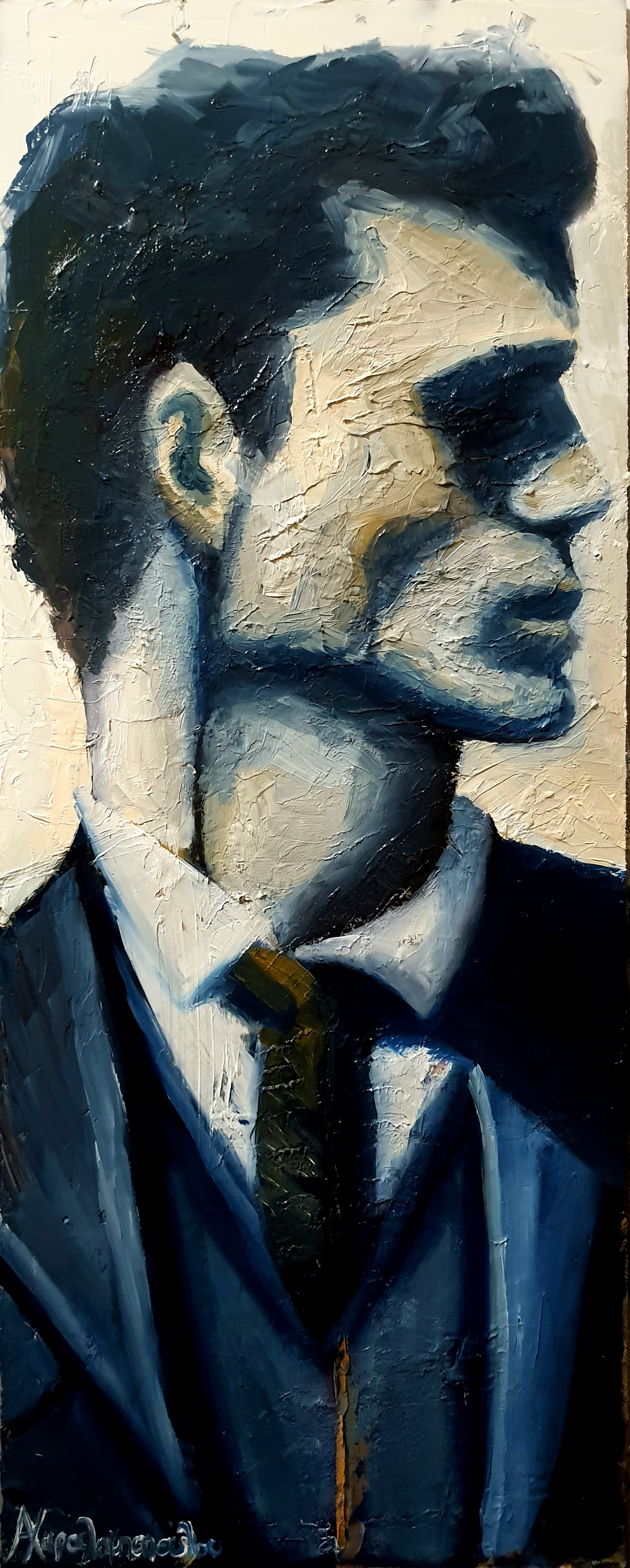
The Maurice Trilogy examines the gradual transformation of identity under the pressure of ambition, performance, expectation and social conformity. The series is built around Maurice, a constructed persona whose name emerged through an association with The Success Manager (Οδηγός προς ανερχόμενους) by Maurice Joly — a text concerned with the psychological compromises, strategies and adaptations embedded within systems of advancement.
Maurice is not a representation of a historical figure. He functions as a contemporary archetype: an individual whose identity becomes progressively entangled with the structures through which success is defined and measured.
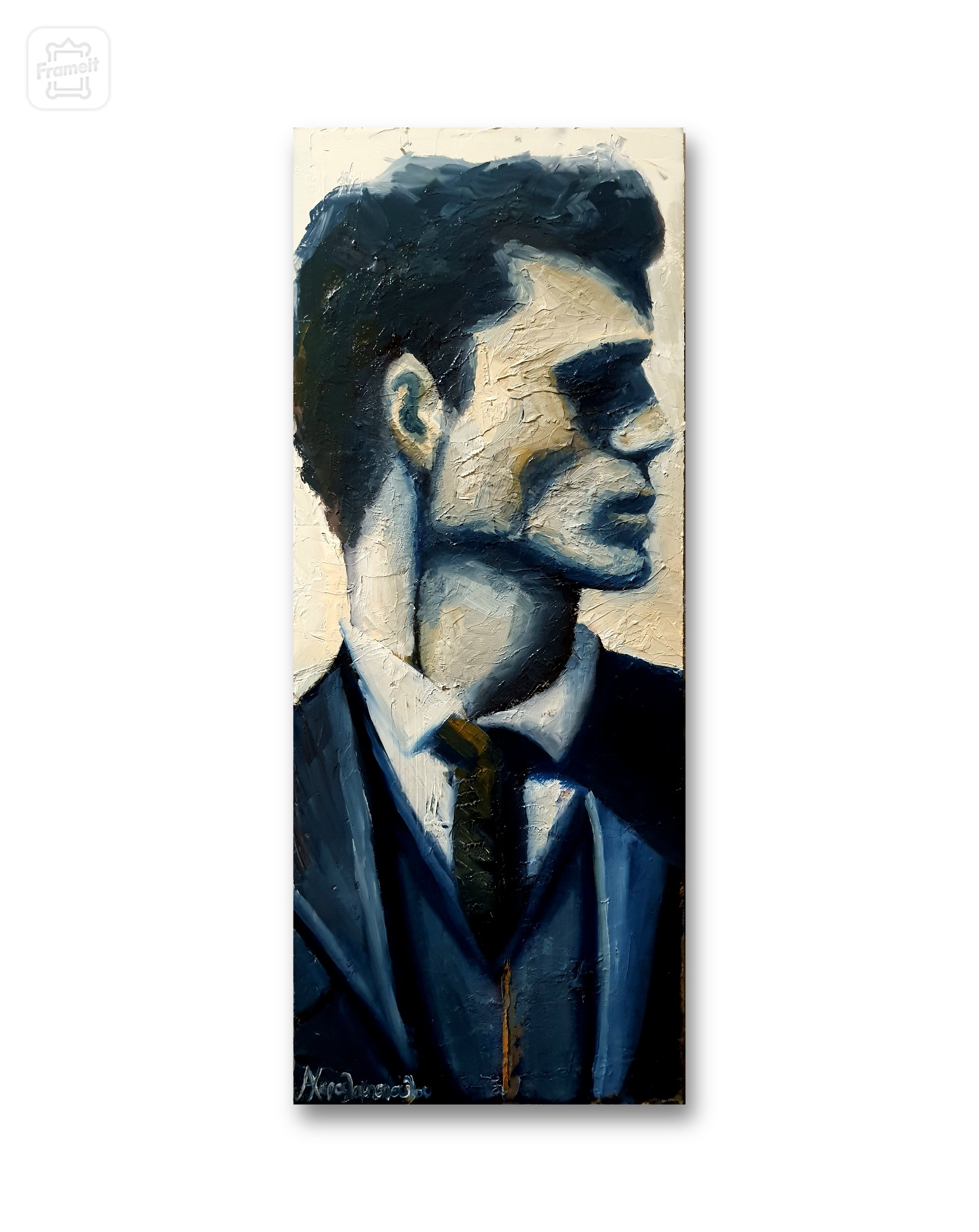
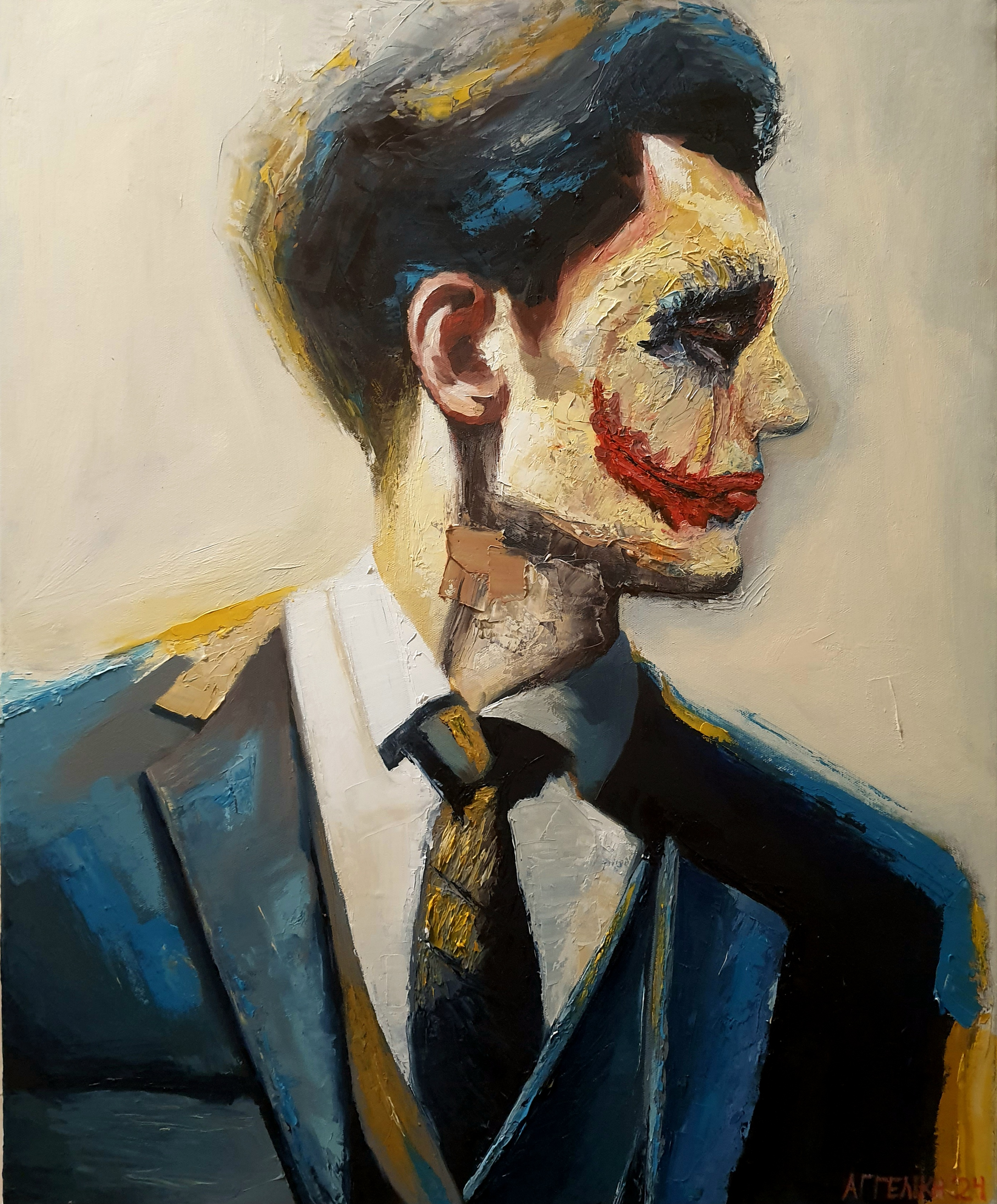
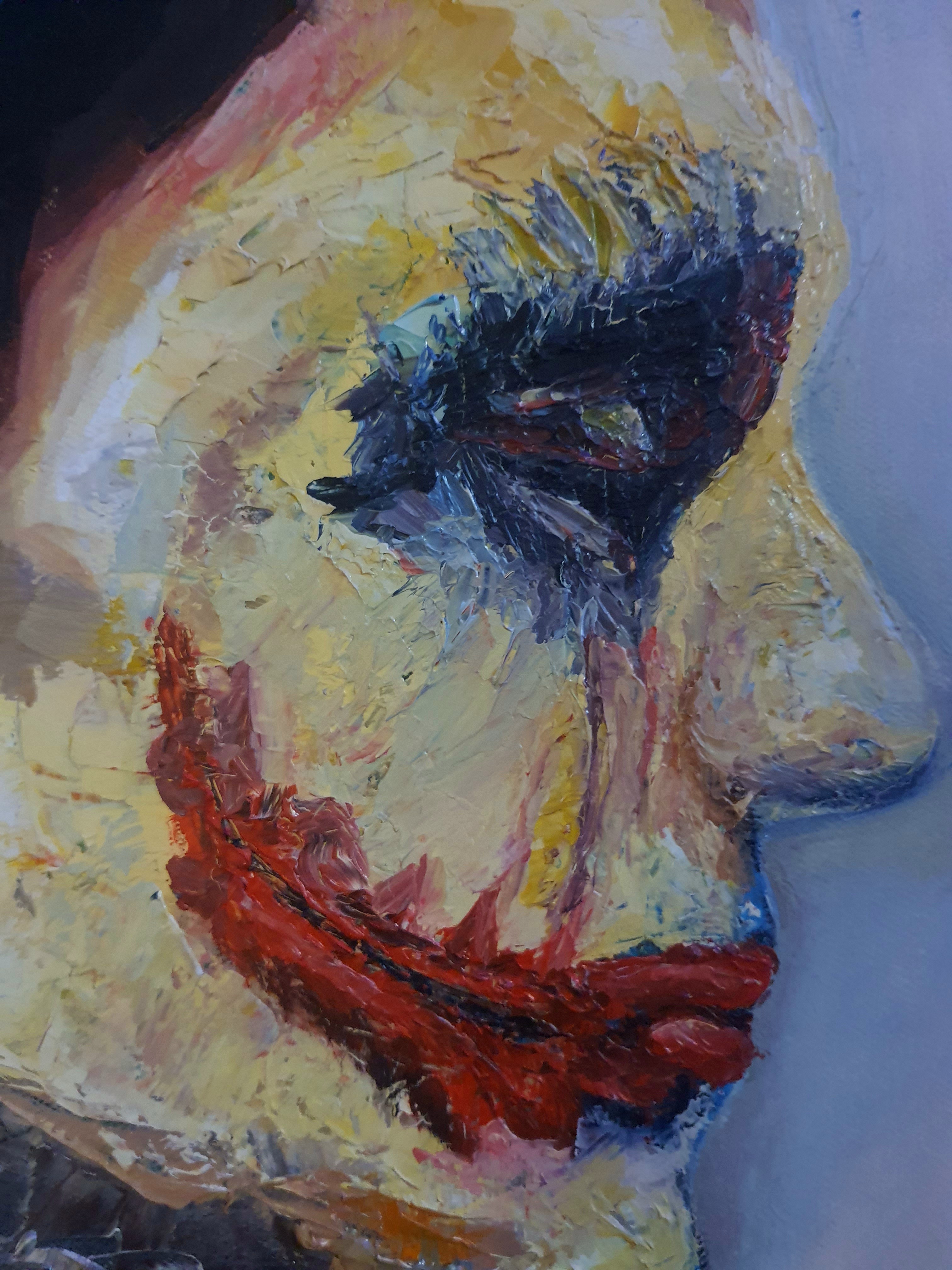
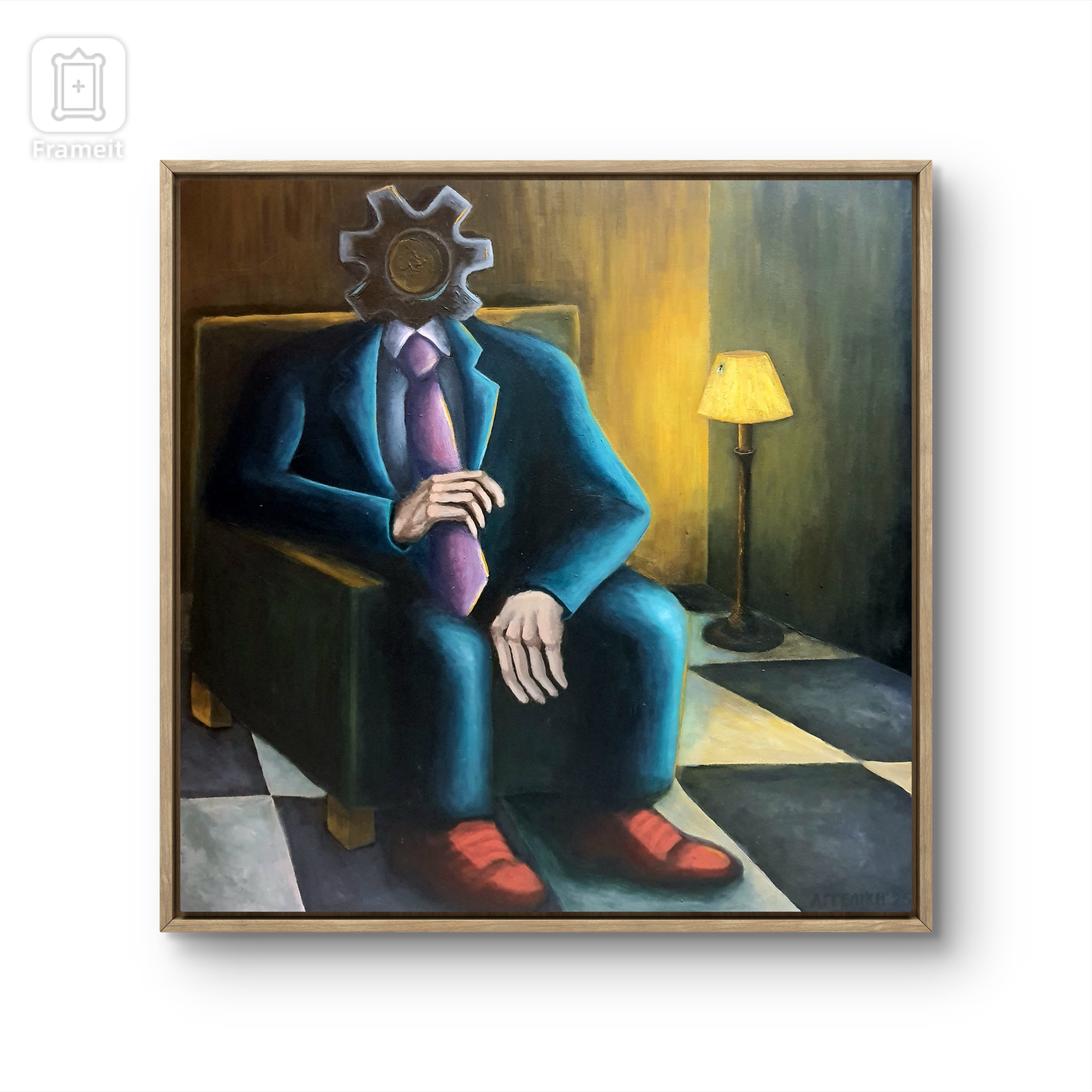
Across three works — Maurice, Corporate Maurice and Maurice Incorporated — the trilogy traces a gradual internal shift. In the first, ambition remains conscious and the individual is still distinguishable from the role he is beginning to inhabit. In Corporate Maurice, expectation and performance have moved inward; the system no longer operates only around him, but increasingly through him. By Maurice Incorporated, the distinction between person and function has almost disappeared.
Rather than depicting collapse through conflict, the trilogy focuses on erosion through compliance. Maurice does not resist the system; he adapts to it, gradually exchanging uncertainty and interior freedom for the apparent safety of structure, certainty and external validation. The transformation therefore occurs not through a dramatic rupture, but through accumulation: repeated compromises, performed identities and increasingly automatic forms of participation.
The trilogy develops within an existential framework concerned with freedom, responsibility and the temptation to escape uncertainty through predetermined structures. Maurice seeks stability in systems that offer direction and recognition, yet the more completely he conforms to them, the less space remains for an autonomous self.
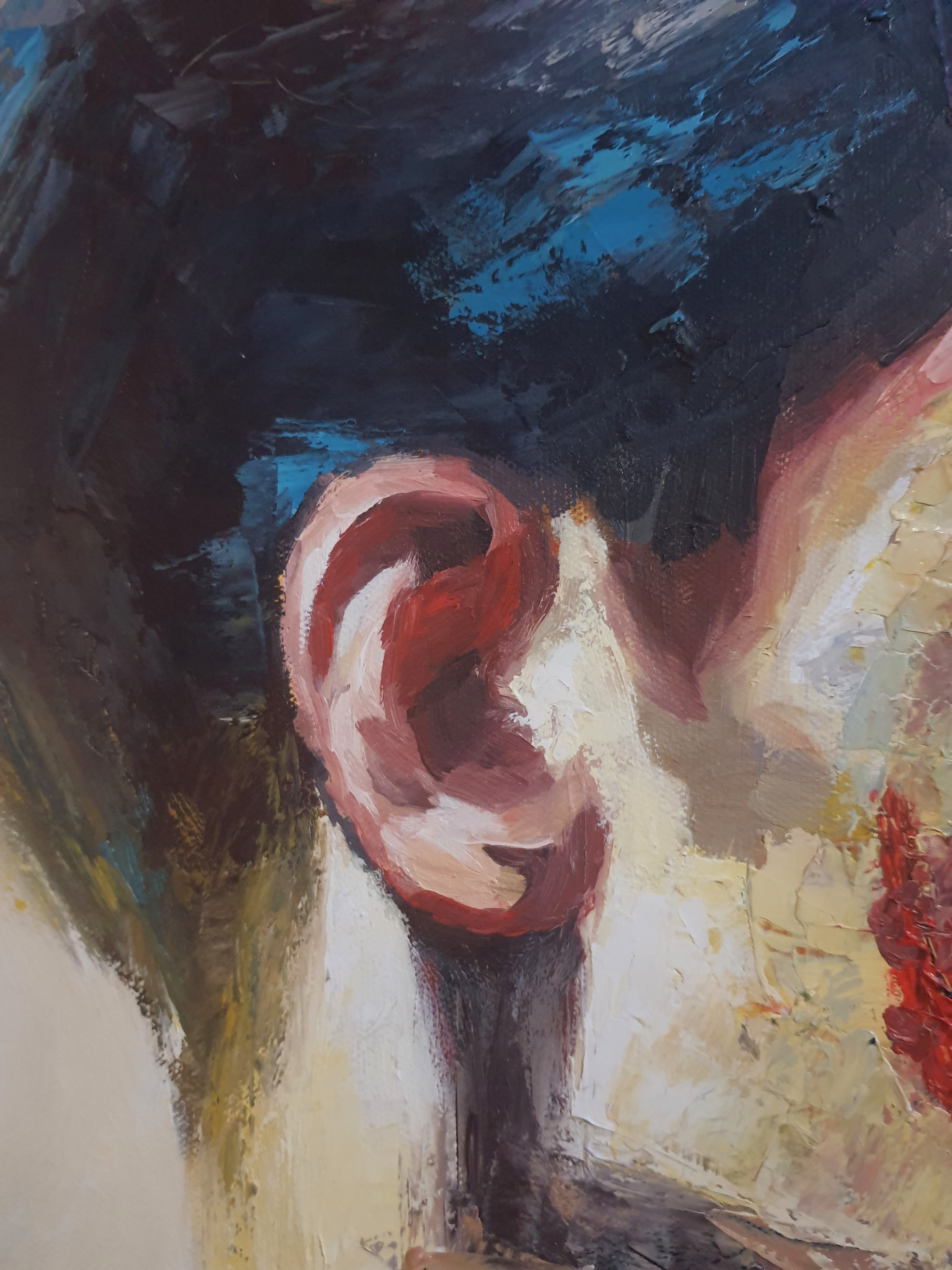
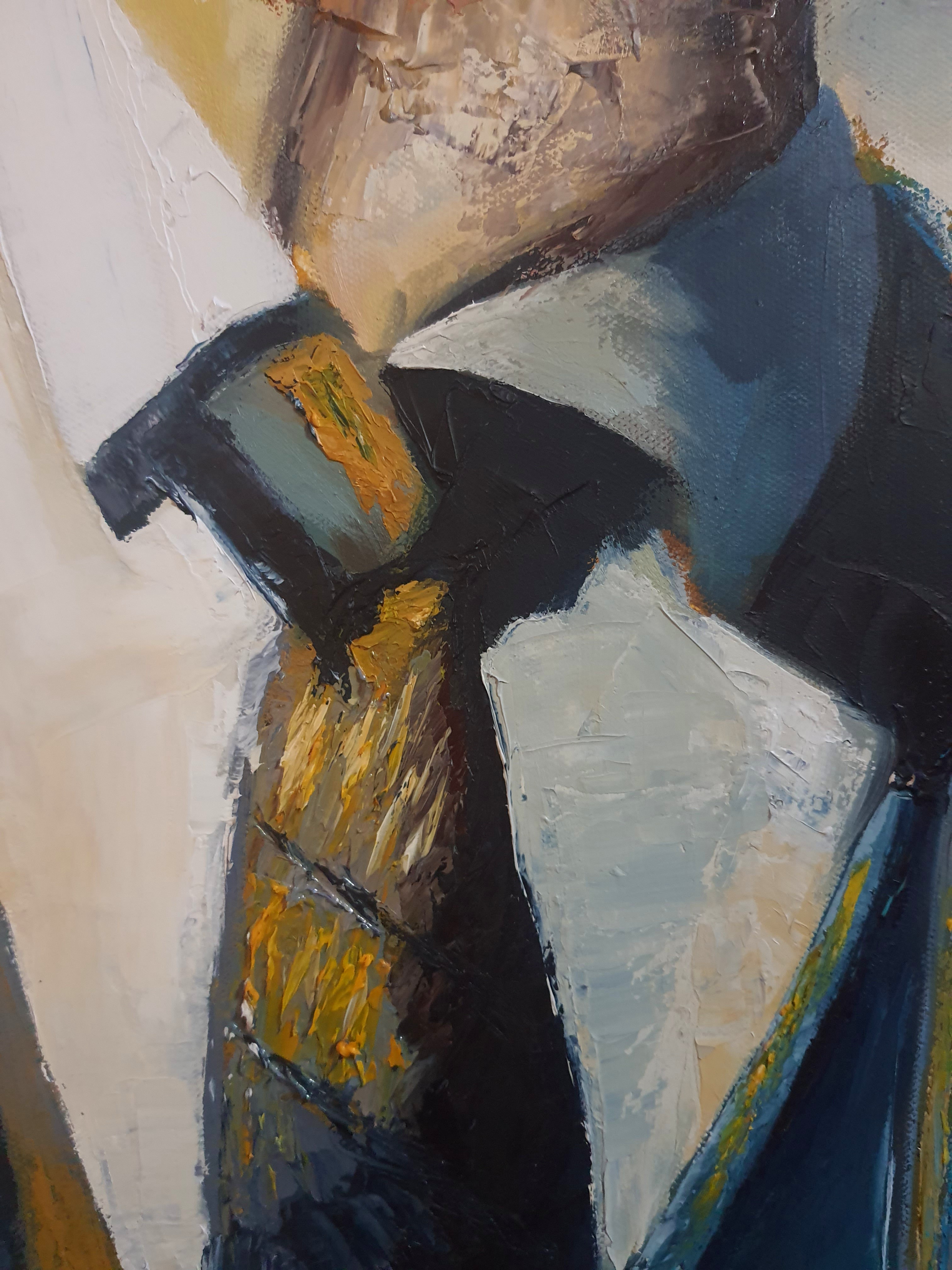
Visually, the works combine expressive figuration, symbolic elements and controlled chiaroscuro. Human gestures persist even as identity becomes increasingly unstable, while recurring signs of performance, restriction and repetition gradually shift the figure from individual presence towards function.
Within the trilogy, Maurice Incorporated represents an apparent point of completion. Maurice no longer merely performs the identity demanded of him; the persona has become indistinguishable from the person beneath it. What remains appears efficient, recognisable and fully integrated into the system, yet increasingly difficult to locate as an autonomous self.
The trilogy therefore asks what happens when a structure initially adopted as a means becomes an identity in itself. It reflects on contemporary forms of success, conformity and self-construction, questioning what is preserved — and what gradually disappears — when external expectation begins to determine the terms through which a person understands themselves.