

An evolving transdisciplinary project
2023–present
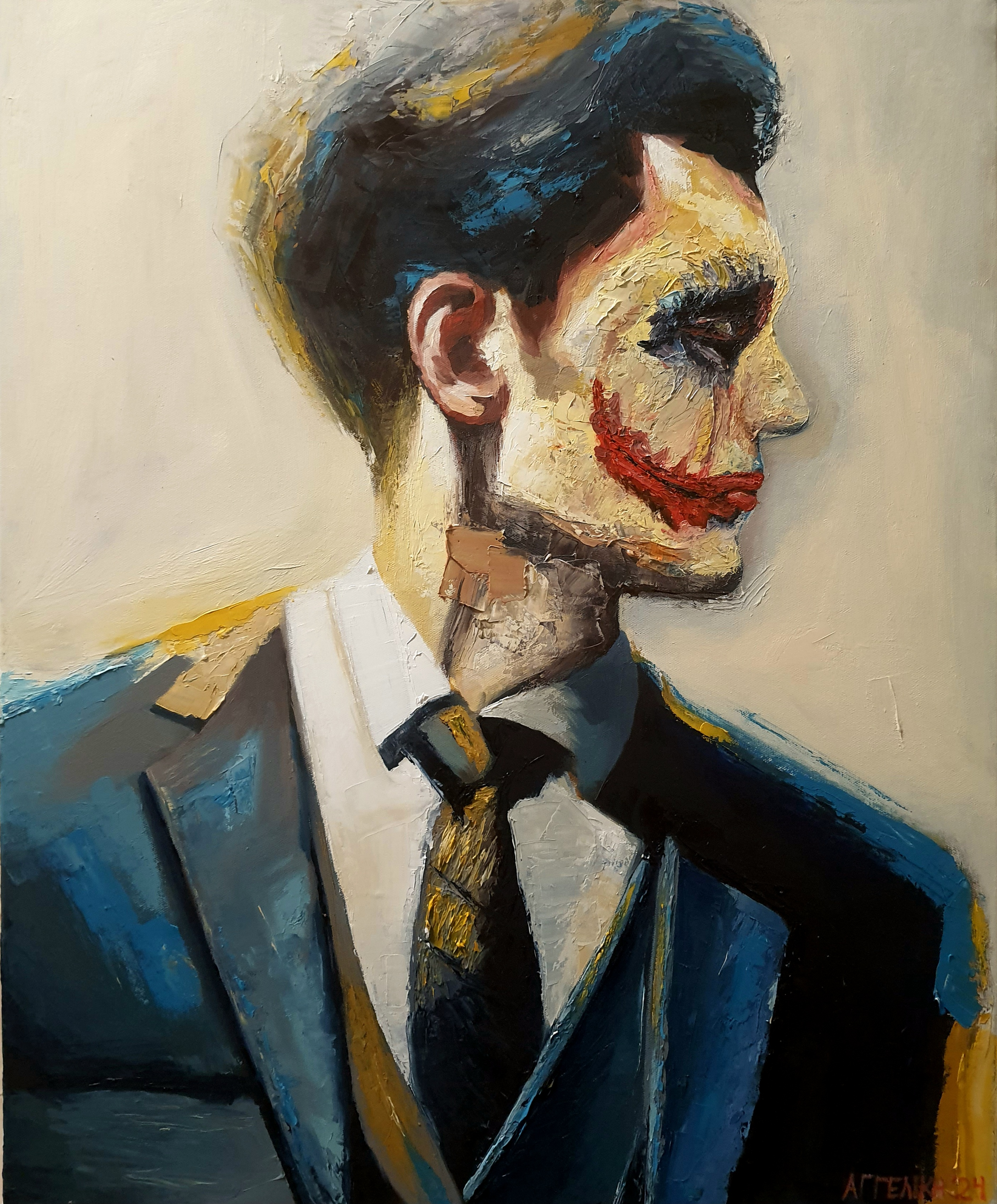
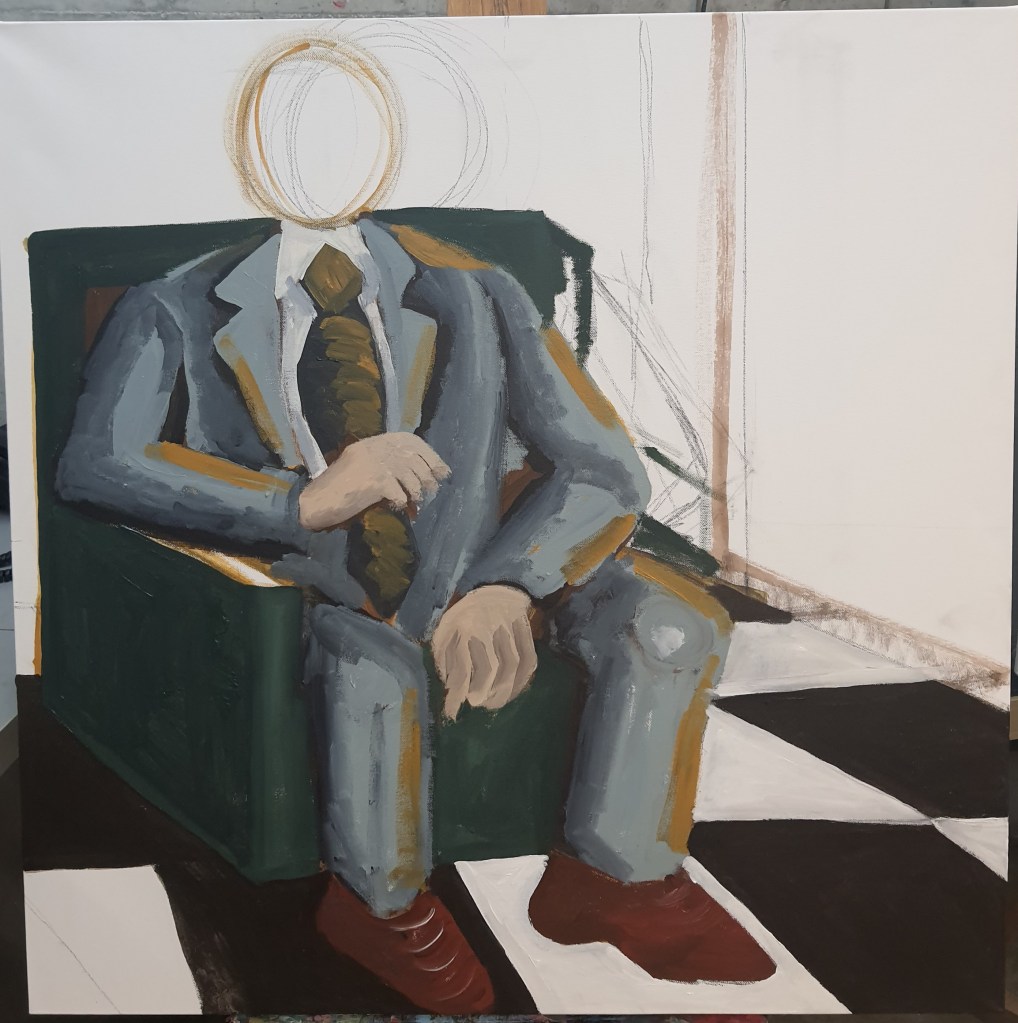
Maurice began as a painted figure. Over time, however, the boundaries of the canvas became insufficient to contain him.
Across four years of artistic development, Maurice has moved between painting, visual research, fragmented narrative and written correspondence. He has gradually become less a singular character than a recurring structure: a body through which questions of identity, conformity, labour, consciousness and existential freedom can be examined.
This archive follows that development. It brings together completed works, texts, symbols and selected process material, not as illustrations of a fixed story, but as evidence of an artistic investigation that remains unresolved.
Maurice continues to appear, disappear and transform.
The Project
The Maurice Archive occupies a distinct position within my practice because it has developed through duration rather than through a single completed work.
Its meaning was not established from the beginning. It accumulated gradually through repeated appearances, visual mutations, narrative fragments and recurring symbols. Each work altered the conditions through which the next could emerge.
Maurice can be read as an individual, an institutional subject, a fragmented consciousness or an unstable reflection of the viewer. He is neither a conventional protagonist nor a direct self-portrait. He functions as an intermediary body: sufficiently human to invite identification, but sufficiently indeterminate to resist possession by a single identity.
The archive is therefore not intended to provide a definitive account of who Maurice is. It traces the conditions through which he is continuously produced.
Genesis
The First Appearance
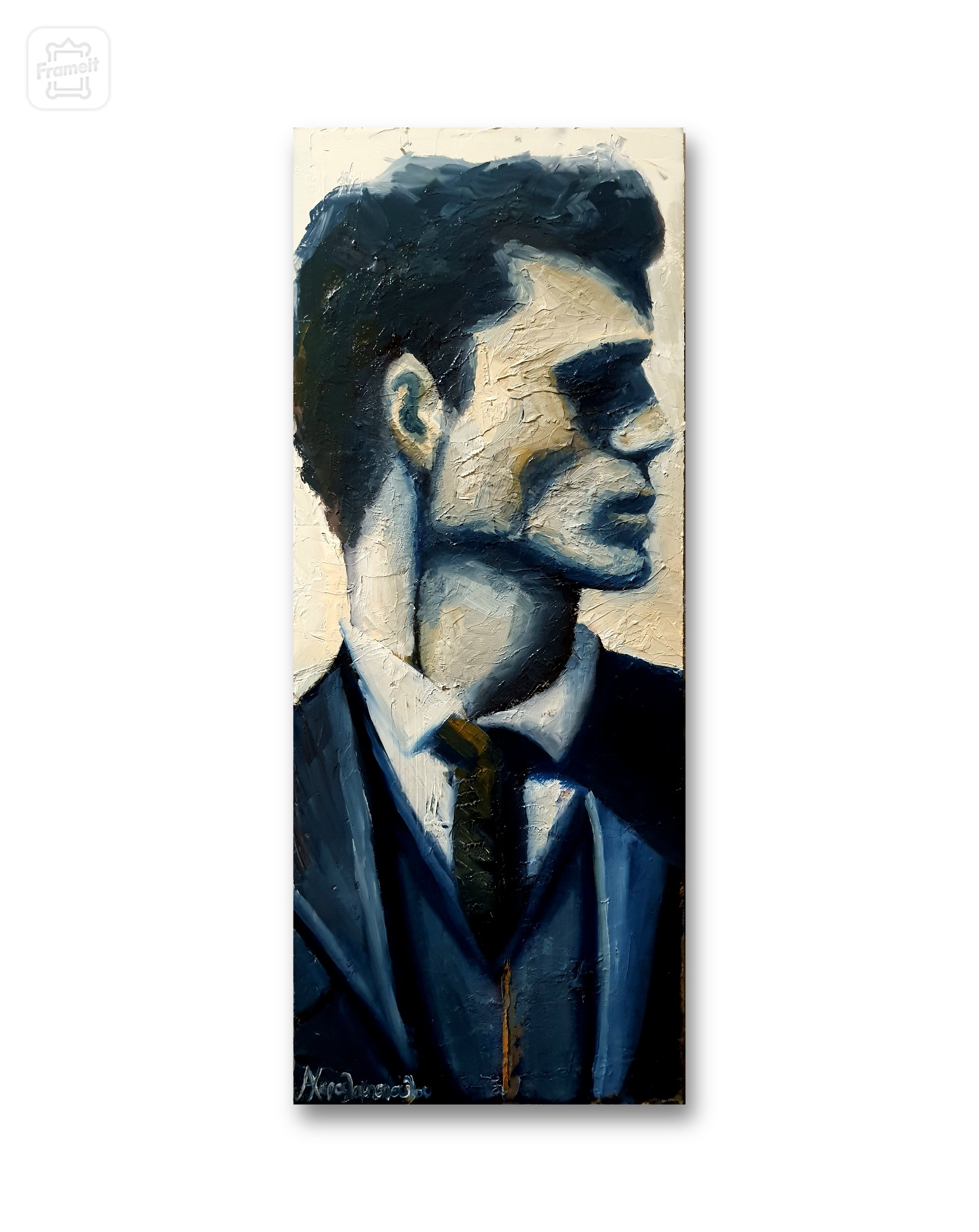
Maurice first emerged through painting, before he possessed a defined history or voice.
At this initial stage, the figure existed primarily as a bodily and psychological presence. His identity was communicated through posture, expression, clothing and spatial isolation rather than through narrative explanation.
The early works established several tensions that would later become central to the project: the conflict between the individual and the role he performs, the body and its social exterior, visibility and concealment, interior freedom and external structure.
Maurice did not enter the work as a fully formed character. He appeared first as a question.
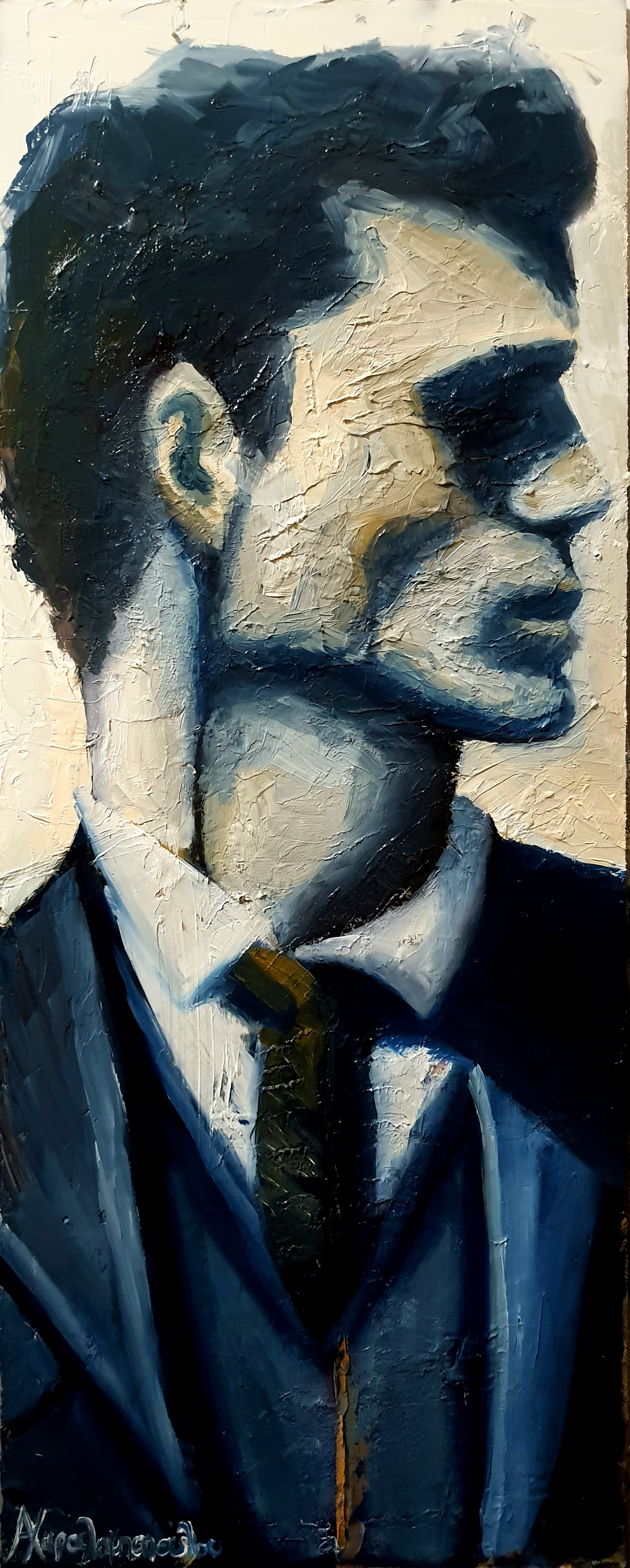
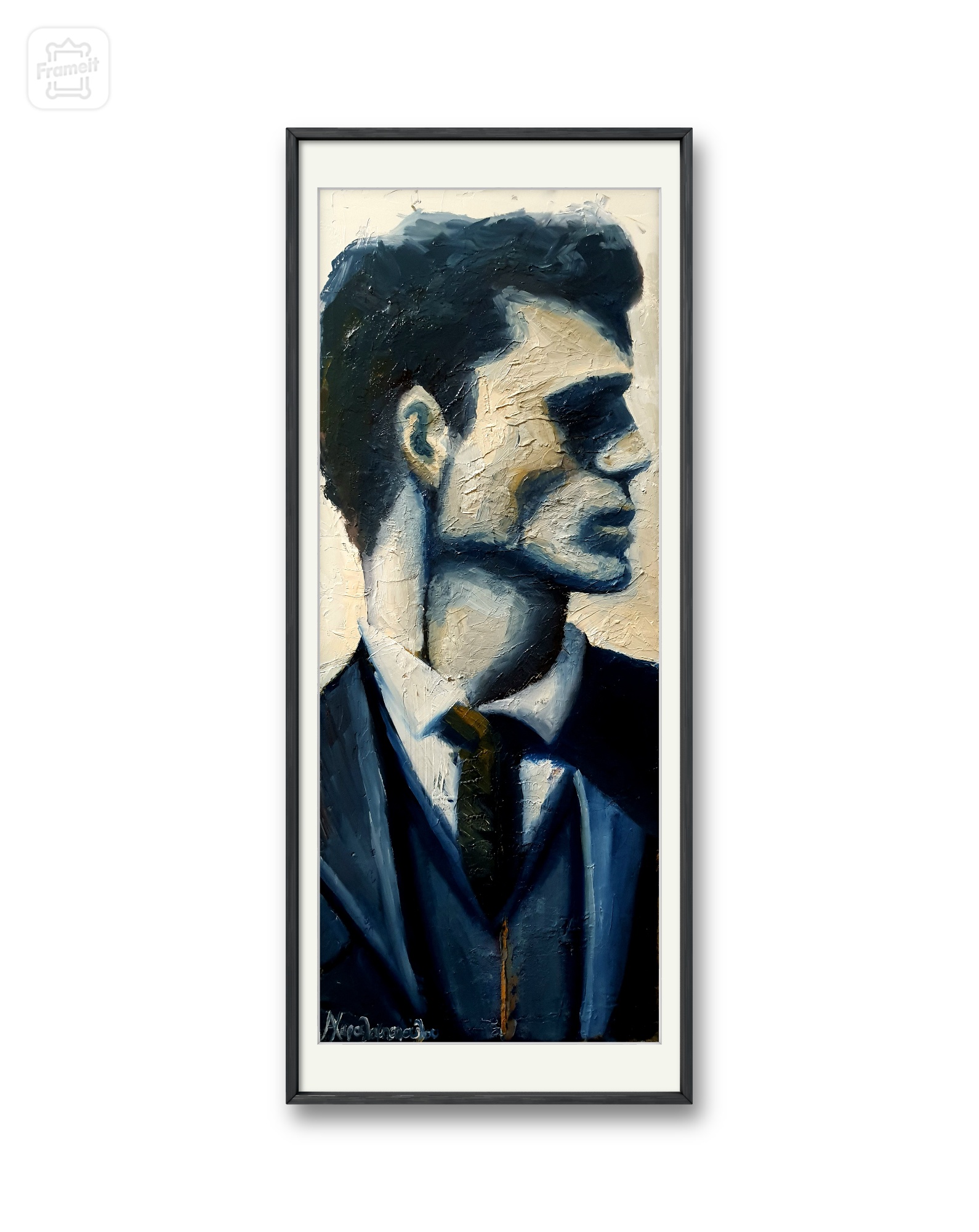
Oil on wood panel, 50*20, 2023
The Name
Maurice was not Maurice from the beginning.
The first figure appeared without a name, and even while working on the second painting I had not yet conceived of him as a character with a defined identity. Yet throughout the process, there was something about that second figure that kept troubling me. Something strangely familiar that I could not immediately place.
It was only once the painting was finished that the association surfaced.
I thought of The Success Manager — Οδηγός προς ανερχόμενους by Maurice Joly, a book I had returned to repeatedly throughout my life. Its reflections on ambition, success, social behaviour and the mechanisms through which individuals navigate systems of advancement had remained with me long after each reading.
The connection was retrospective. The paintings had not been conceived as illustrations of Joly’s book, nor had the figure been consciously based upon it. Rather, something in the completed second painting seemed to inhabit a psychological territory I already recognised from the book.
And so I borrowed the author’s first name.
He became Maurice.
From that moment onward, however, the figure gradually moved beyond the association that had first given him a name. Through subsequent paintings and writing, Maurice accumulated his own psychology, contradictions, symbols and internal world, becoming increasingly autonomous from his point of origin.
In this sense, the name functions almost as a residue of origin: a trace of what initiated the character, preserved within a universe that has since expanded far beyond it.
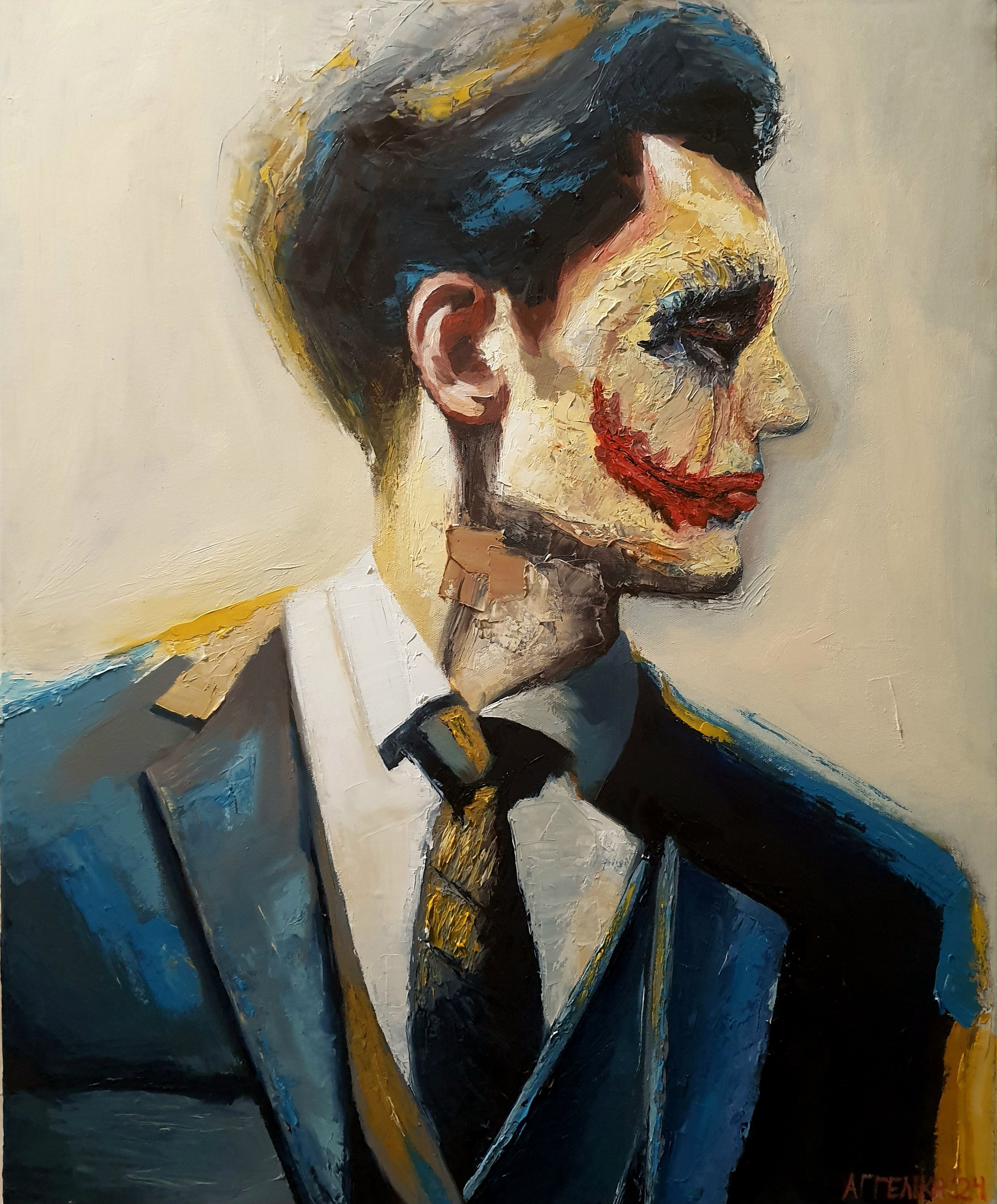
The Painted Figure
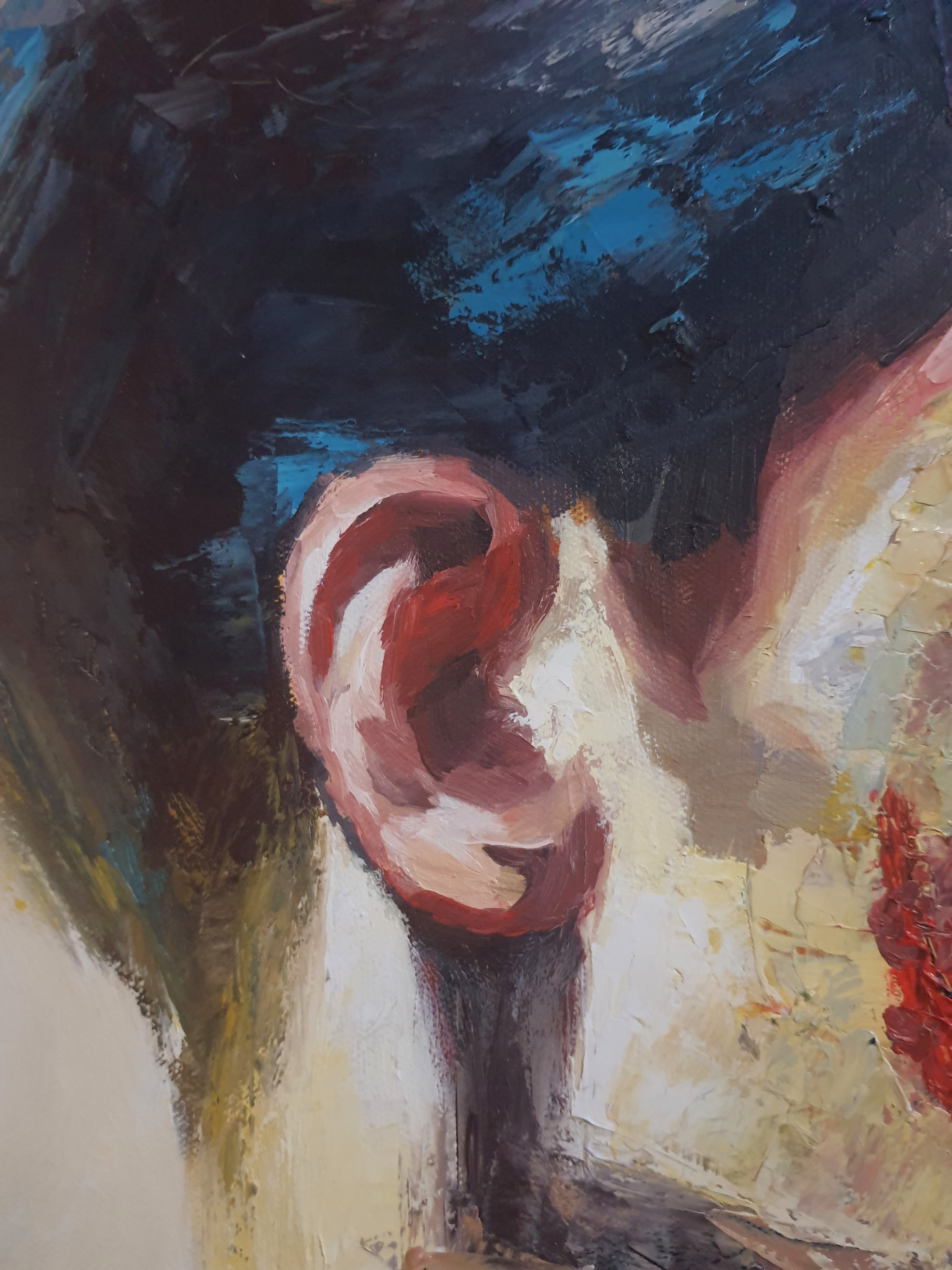
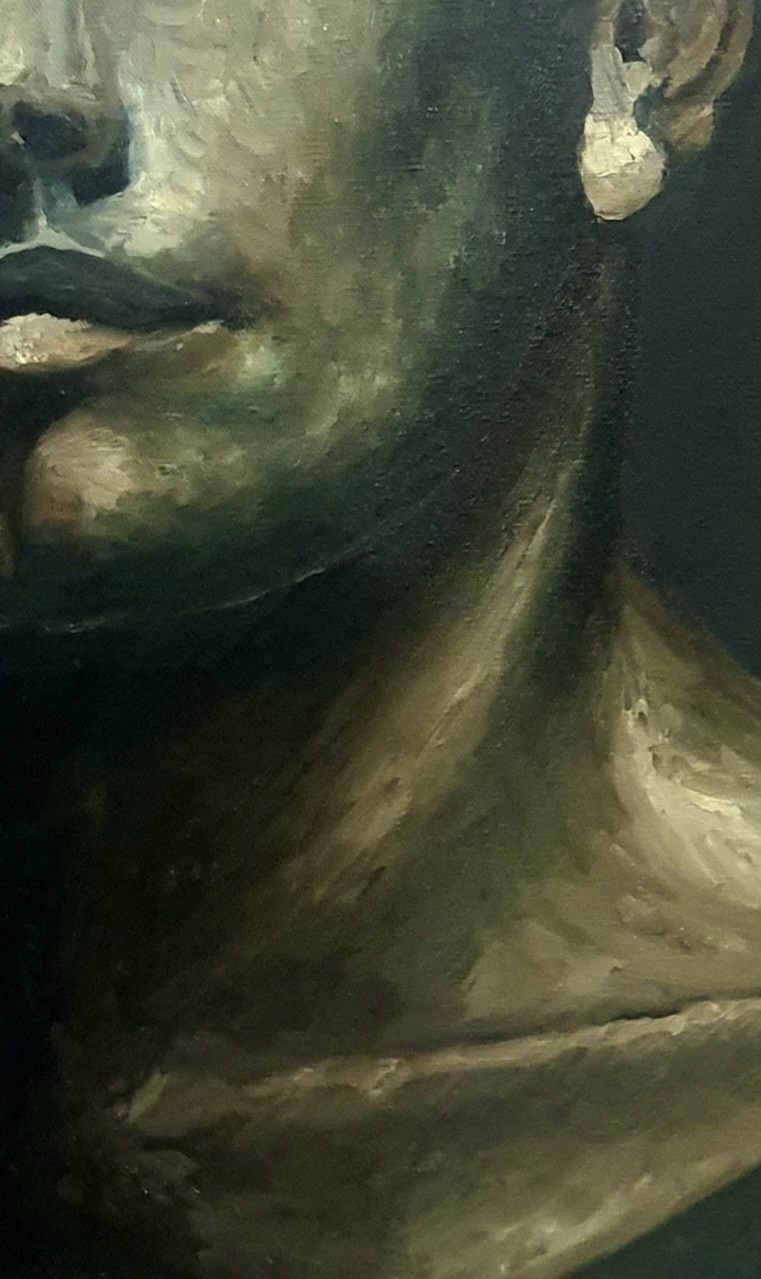
Painting gave Maurice his first material existence.
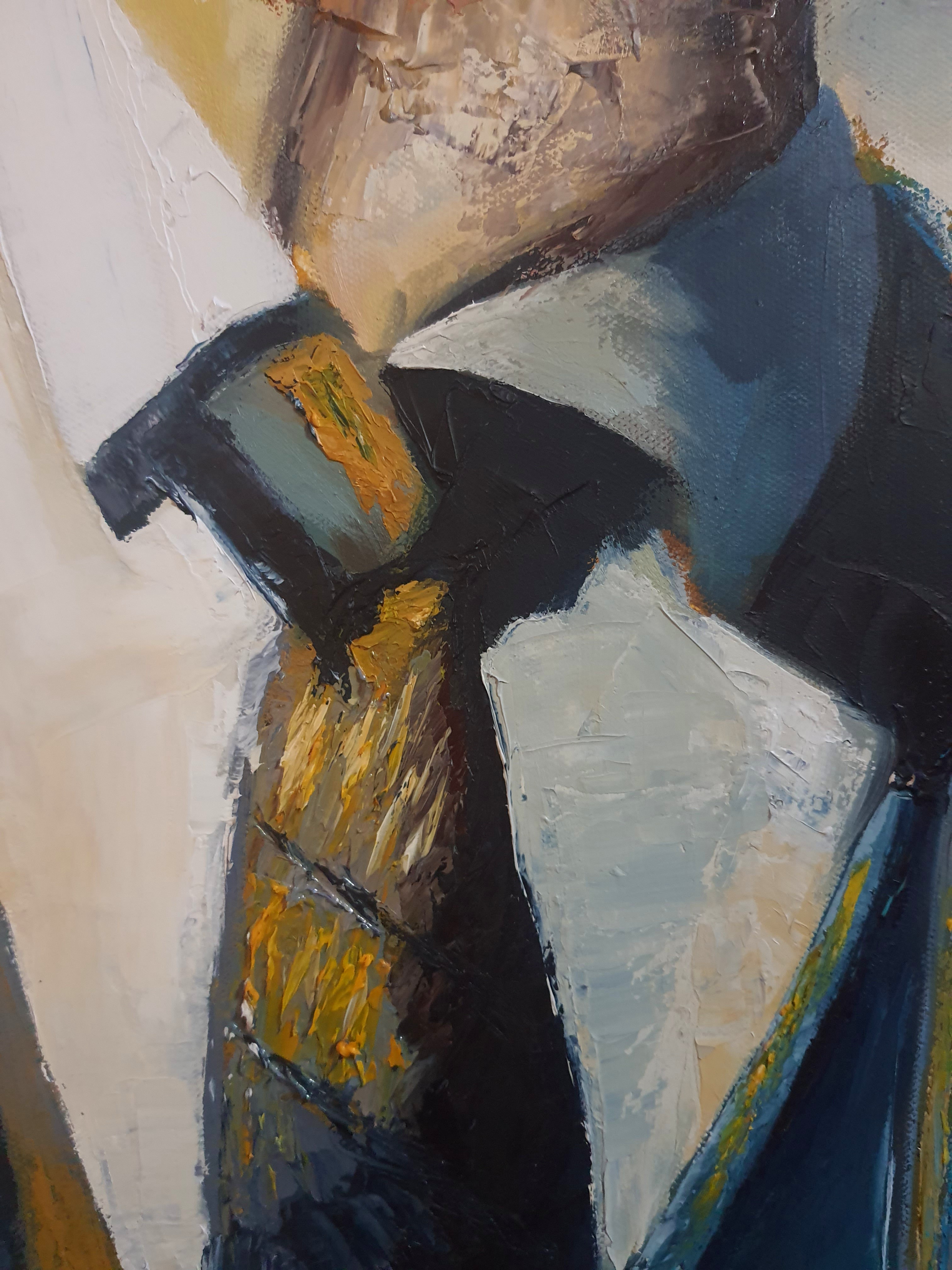
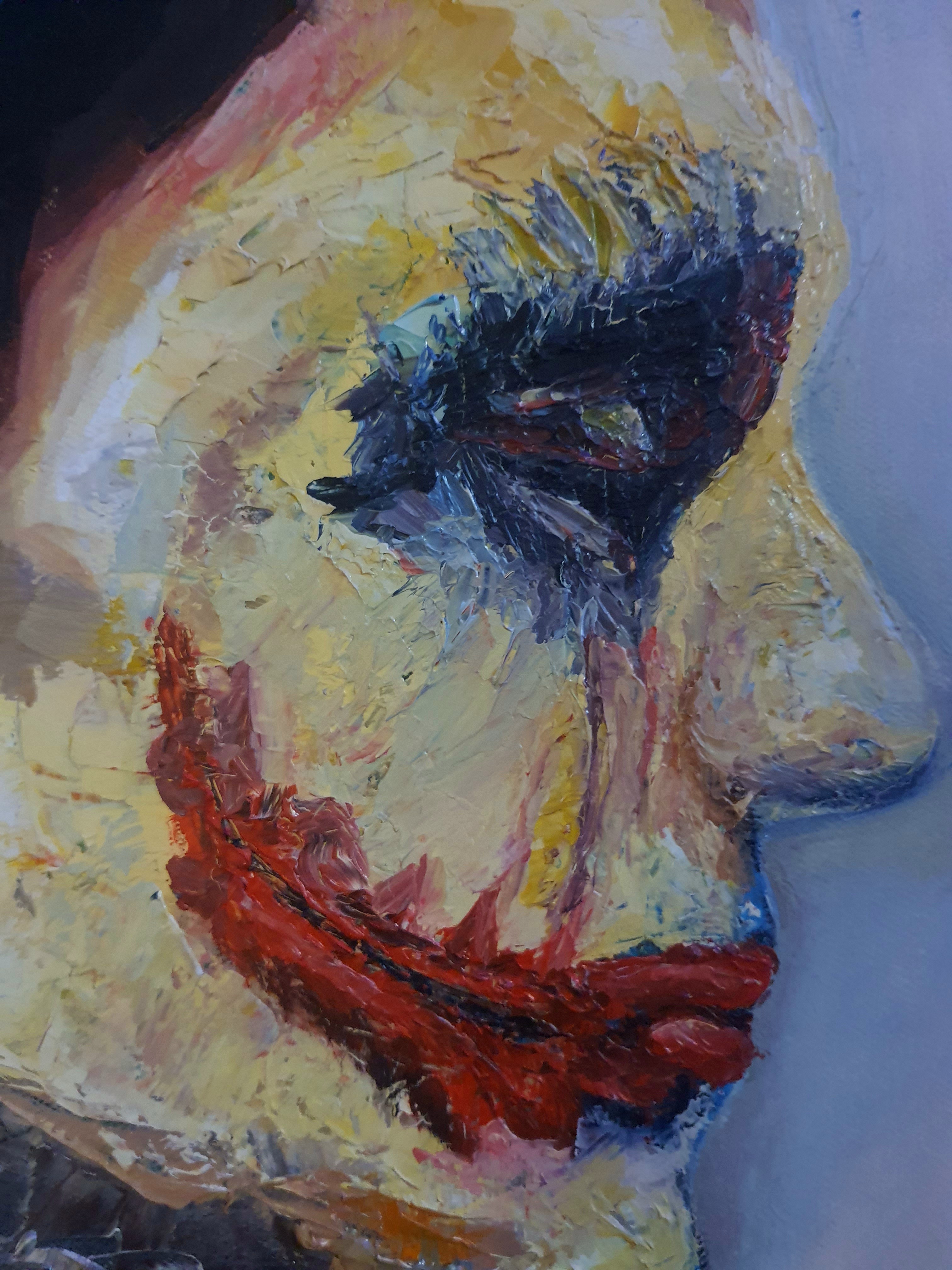
Through the painted surface, his body could remain simultaneously present and unstable. Features could emerge and dissolve, clothing could operate as both social identity and restraint, the surrounding space could appear recognisable while refusing to become entirely coherent.
In these works, Maurice is often suspended between action and paralysis. His body occupies the image, yet he does not appear fully at home within it. He seems observed, exposed or absorbed into a structure that exceeds him.
The paintings do not illustrate episodes from a continuous biography. Each presents a possible condition of Maurice: a temporary configuration of body, consciousness and environment.

Maurice Incorporated
Project Expansion
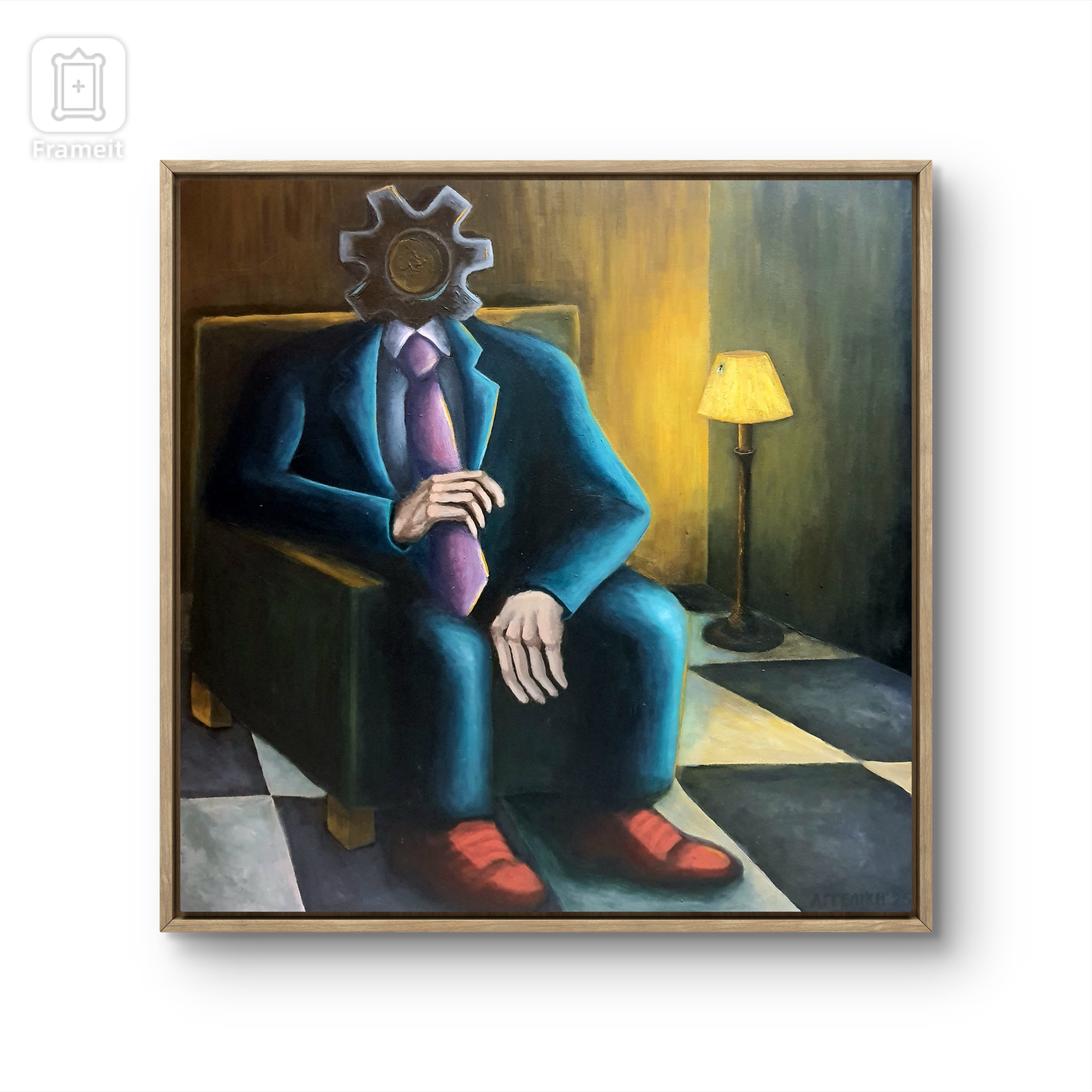
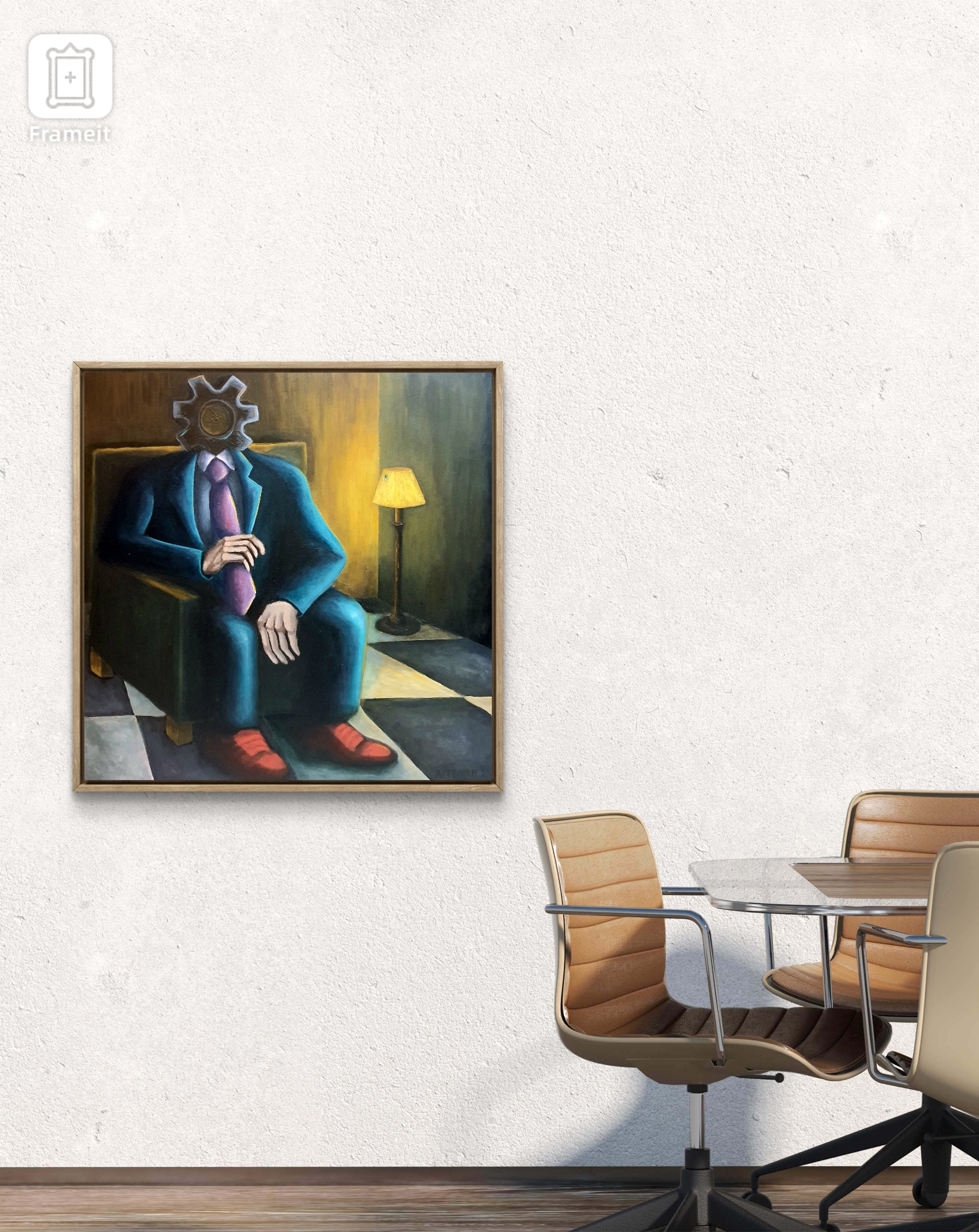
Maurice Incorporated marks an expansion of the project from the psychology of the isolated figure towards the systems that produce and organise identity.
The corporate environment is not treated merely as a professional setting. It becomes a symbolic architecture: a structure of repetition, obedience, hierarchy, appearance and controlled behaviour. Maurice inhabits this system, but the distinction between individual and institution has begun to collapse.
His clothing identifies him while simultaneously reducing him to a function. His body remains human, yet it appears increasingly incorporated into the mechanisms surrounding it.
The lamb introduces associations of innocence, conformity, collective behaviour and sacrifice. The Socratic fly acts as a counterforce: an interruption, a disturbance and a demand for consciousness. One figure submits to the movement of the group; the other refuses stillness.
Between them, Maurice exists as both participant and witness.
From Image to Narrative
As the project developed, Maurice could no longer remain exclusively visual.
Painting could construct his body and environment, but it could not fully contain the instability of his memory, his changing perception of time or the contradictions occurring within his consciousness. Narrative allowed the project to enter these internal spaces.
The transition from image to text did not resolve Maurice. It fragmented him further.
Events could repeat without remaining identical. Objects could function simultaneously as physical details, memories and thresholds. The boundary between present experience and recollection became uncertain. Rather than explaining the paintings, the writing opened another version of the same world.
Maurice acquired a voice, but not necessarily authority over his own story.
Becoming Maurice
An Origin Story
Becoming Maurice extends the project into nonlinear narrative.
The text follows Maurice through a world in which ordinary environments gradually lose their stability. Offices, mirrors, windows, bodies and horizons operate both as physical locations and as psychological structures. Time does not unfold as a reliable sequence; different realities appear to coexist, overlap or interrupt one another.
The narrative is concerned less with what happens to Maurice than with the unstable process through which he becomes visible to himself.
His transformation is not presented as liberation in any conventional sense. Self-knowledge does not guarantee escape, and integration does not produce a final, unified identity. The closer Maurice moves towards recognition, the less secure the distinction becomes between the figure he observes and the consciousness observing him.
Becoming is therefore not an arrival. It is an irreversible disturbance.
Documents Attributed to Maurice
At a certain point within the archive, Maurice ceases to exist solely as a figure being represented, narrated or addressed.
Texts begin to appear under his name.
Their position within the chronology remains uncertain. Some seem to belong to the world already established around him while others contain observations, memories or details that complicate the distinction between what Maurice has experienced, what he remembers, and what may still lie ahead.
Rather than clarifying the character, these documents introduce another instability into the archive:
Maurice becomes not only its subject, but a possible author within it.
DOCUMENT 1
On Decision-Making Under Conditions of Uncertainty
Attributed to Maurice – Undated
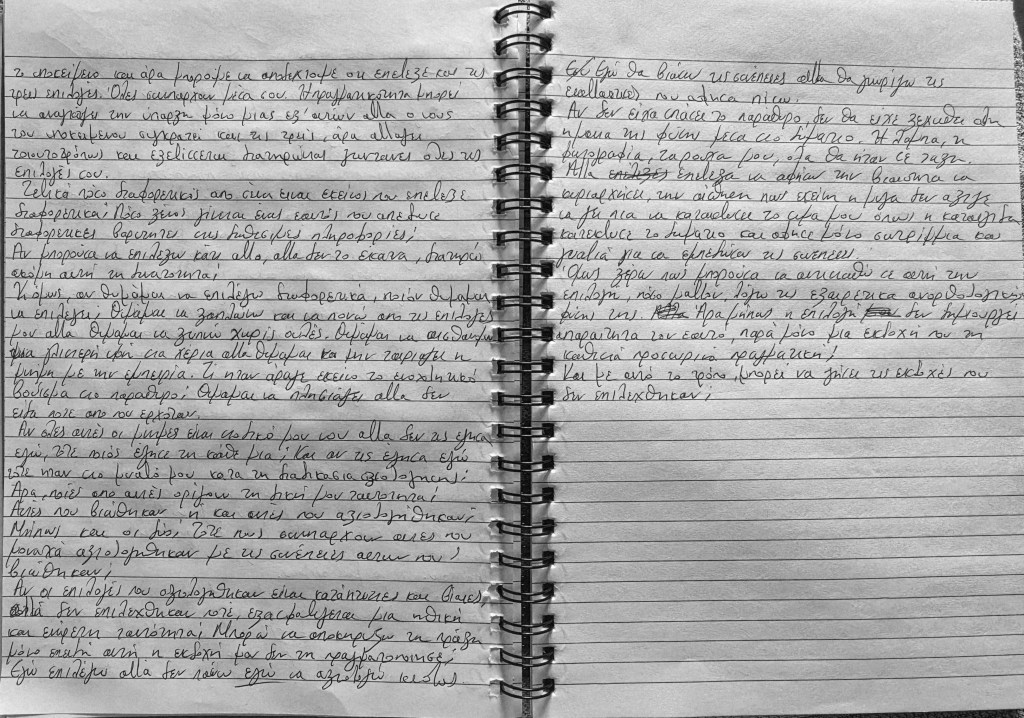
[…]Το γεγονός της αξιολόγησης των επιλογών, αυτό καθεαυτό, ορίζει το υποκείμενο και άρα μπορούμε να αποδεχτούμε ότι και οι τρεις υπήρξαν ως πραγματικές δυνατότητές του. Όλες συνυπάρχουν μέσα σου. Η πραγματικότητα μπορεί να επιβάλλει την ύπαρξη μόνο μίας εξ αυτών, αλλά ο νους του υποκειμένου συγκρατεί και τις τρεις, άρα αλλάζει τοιουτοτρόπως και εξελίσσεται διατηρώντας ζωντανές όλες τις επιλογές σου.
Τελικά, πόσο διαφορετικός από σένα είναι εκείνος που επέλεξε διαφορετικά; Πόσο ξένος γίνεται ένας εαυτός που απέδωσε διαφορετικές βαρύτητες στις διαθέσιμες πληροφορίες; Αν μπορούσα να επιλέξω κάτι άλλο, αλλά δεν το έκανα, διατηρώ ακόμη αυτή τη δυνατότητα;
Κι όμως, αν θυμάμαι να επιλέγω διαφορετικά, ποιον θυμάμαι να επιλέγει; […]
Letters to Maurice
Correspondence
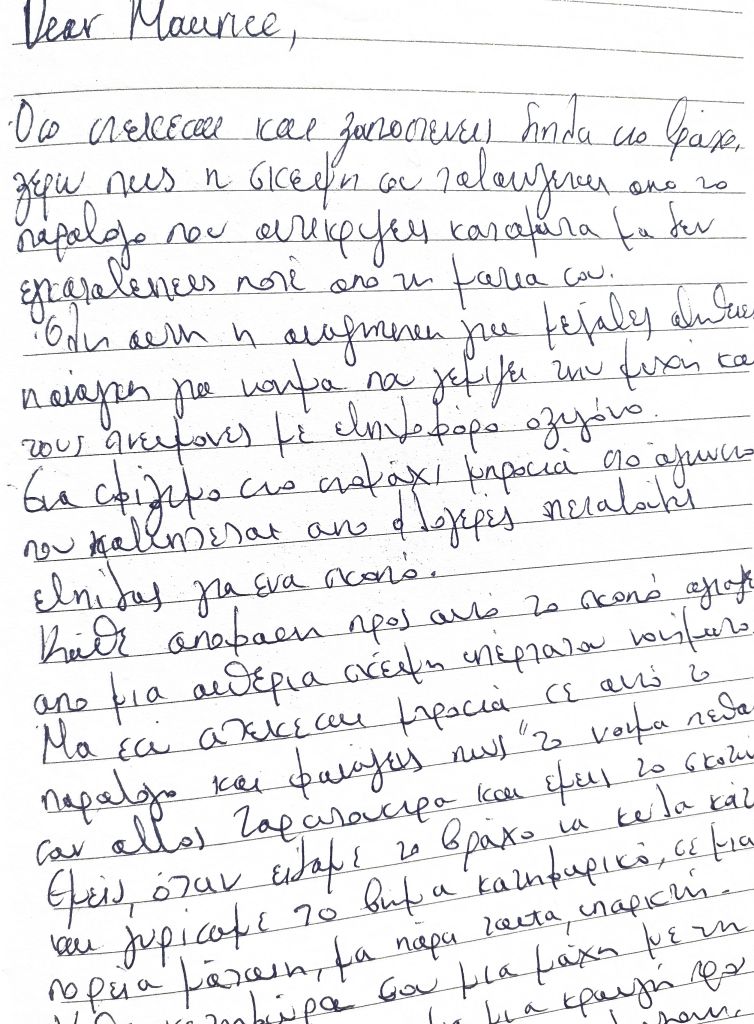
The letters alter the relationship between artist and character.
Maurice is no longer approached solely as an image to be constructed or a protagonist to be narrated. He is addressed directly, as though he possesses an existence outside the works that produced him.
This act of correspondence introduces intimacy, accusation, irony and uncertainty. The voice writing to Maurice appears to know him, yet also questions whether he can ever be known. At moments, the letters speak to him as a companion; elsewhere, as an adversary, a mirror or an internal witness.
The exchange remains structurally incomplete because Maurice does not answer in a conventional form.
His response is found instead in his recurrence.
Symbolic Constellation
The Fly. A force of interruption and critical consciousness. It disturbs passive acceptance and refuses to permit the surrounding system to remain unquestioned.
The Mirror. A site of recognition that cannot be trusted completely. The reflection may reveal, repeat, distort or replace the observing subject.
The Window. A boundary between enclosure and possibility. It permits vision without necessarily permitting passage.
The Red Horizon. A promise of freedom that remains distant, unstable or potentially destructive. It is both destination and threshold.
The Sea. A space of dissolution, memory and return. Beneath its surface, identity becomes fluid and the distinction between preservation and disappearance begins to weaken.
The Tie. A sign of professional identity, discipline and incorporation. It can operate as decoration, uniform, restraint or residue.
The Lamb. A figure of innocence, conformity, passivity and sacrifice. Its vulnerability is inseparable from its participation in the collective.
The Body. The principal territory in which the conflict of the project becomes visible. It carries social roles, memory, vulnerability and resistance before these can be articulated through language.
Blood. Evidence of life, rupture and irreversible contact. It marks the moment at which abstraction enters the body.
Process and Development
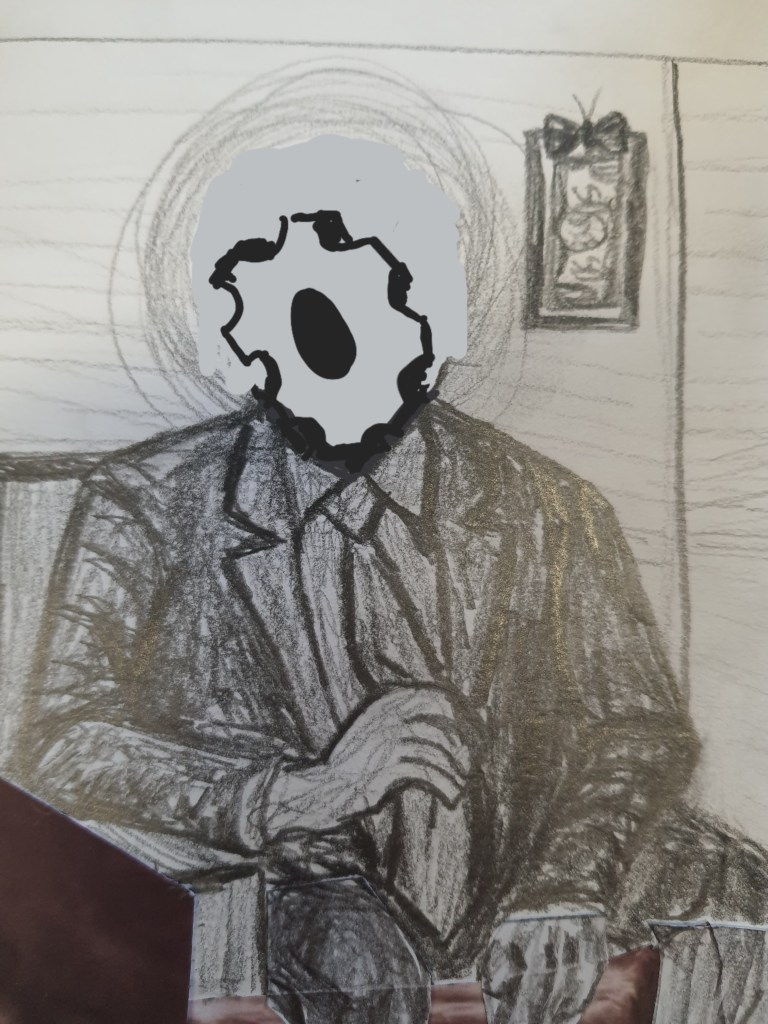
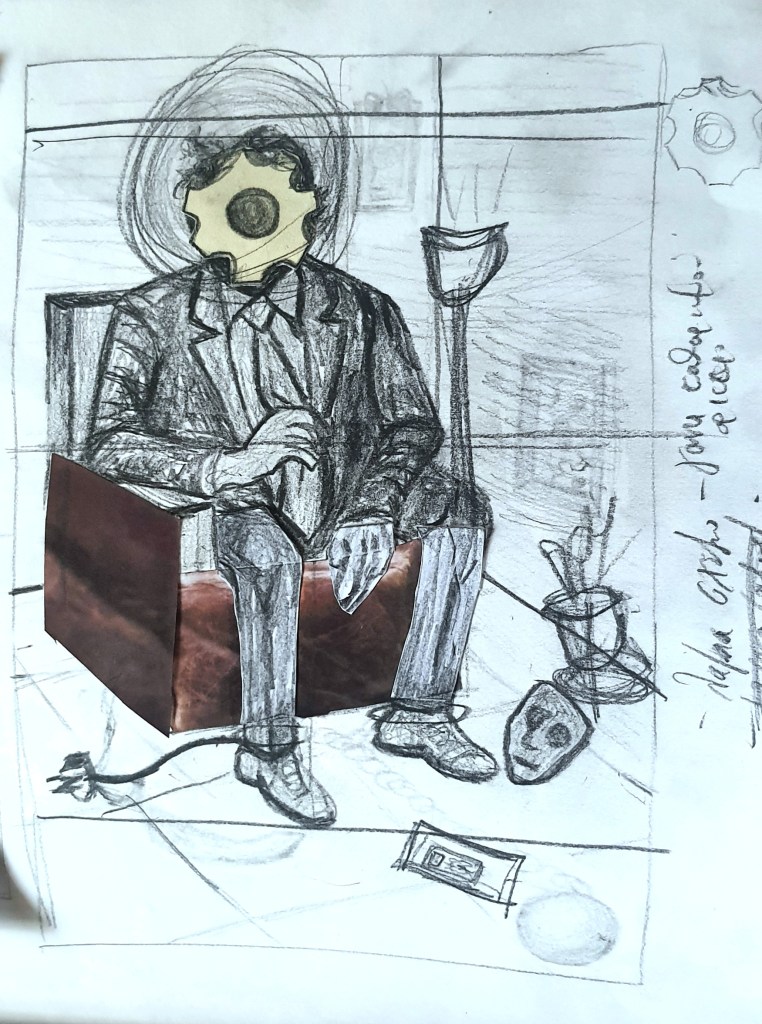
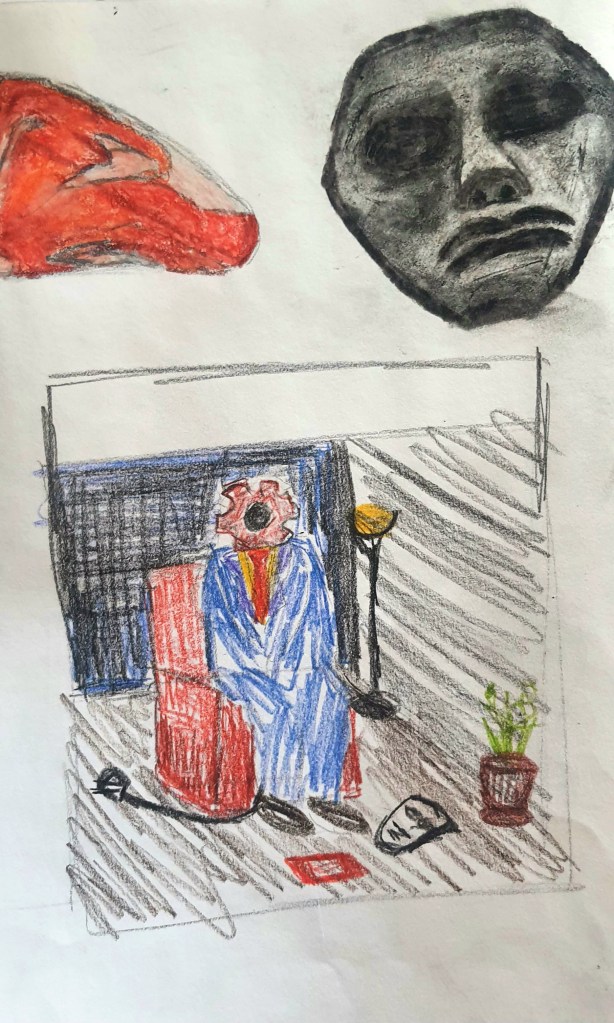
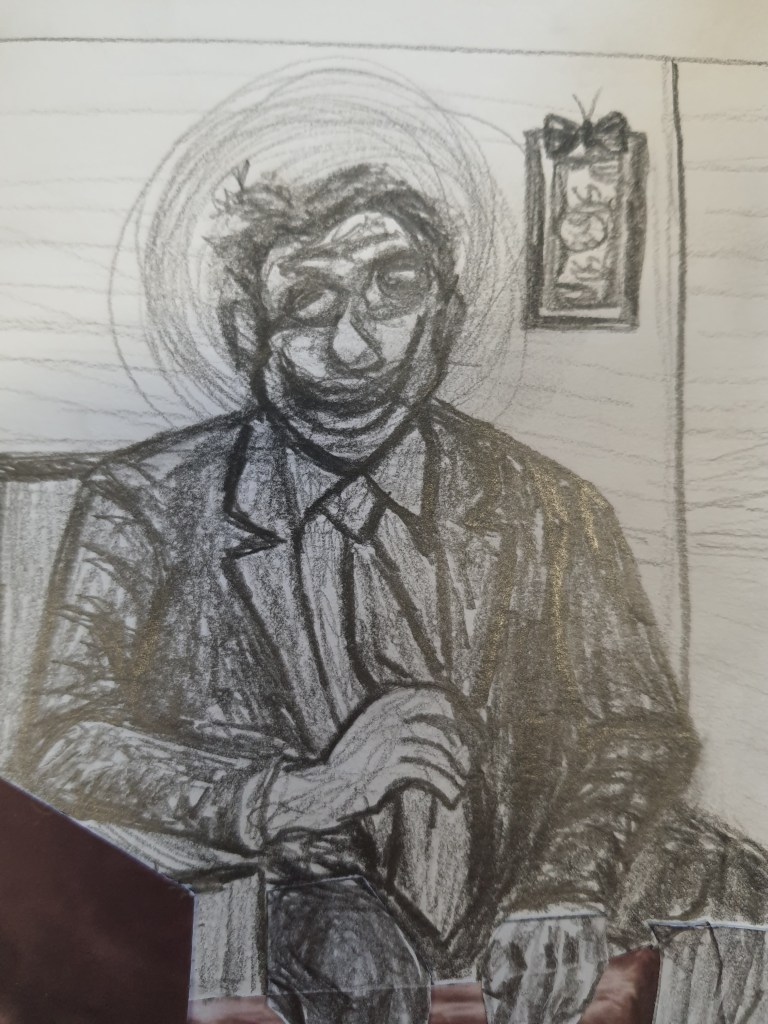
The process material included in this archive is not presented as supplementary decoration. It records the gradual construction of the Maurice project.
Sketches, revisions, compositional alternatives, annotations and fragments demonstrate how its visual and narrative language has changed over time. They reveal ideas that disappeared, symbols that gained importance and forms that returned after periods of absence.
The archive remains selective. Not every stage of production is displayed. The purpose of the process section is not to document every action, but to make visible the decisions through which the project developed.
Maurice is formed as much through revision and omission as through accumulation.



Ongoing Archive
The Maurice Archive does not conclude with a resolved identity or a final narrative.
Its continuity depends upon Maurice remaining partially inaccessible: recognisable enough to return, but unstable enough to change with each appearance. New works do not simply add episodes to his history. They reorganise the meaning of what preceded them.
Across painting and writing, Maurice continues to function as a site of collision between the individual and the structures that define him, between consciousness and performance, and between the desire for freedom and the systems through which that desire is expressed.
The archive remains open.
Maurice is still becoming.

